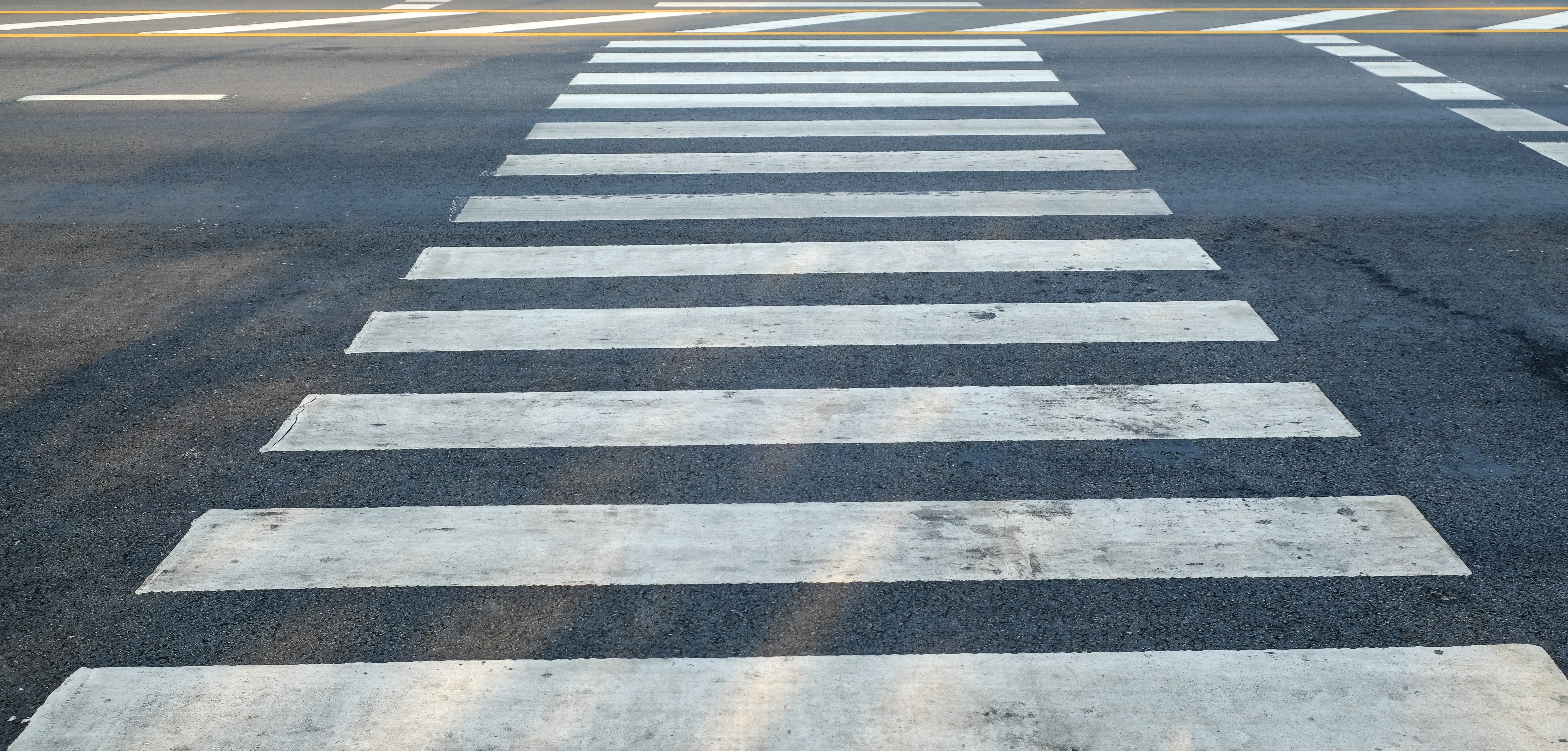
Are crosswalks really there to protect pedestrians, or are they mostly designed to keep cars moving?
This is a good point of view and excellent question. Crosswalks are intended to protect pedestrians, but it is understandable why they do not always feel protective in practice. In many places, a painted line can feel like a thin barrier between a person on foot and fast-moving traffic.
Prior to the 1920s, city streets looked dramatically different than they do today. There were few crosswalks on the street, and they were generally ignored by pedestrians. Streets were considered to be a public space: a place for pedestrians, children at play, similar to a stroll in the park or a walk in the mall. People would move in any direction without really thinking about it. Author Peter D. Norton in the book Fighting Traffic: The Dawn of the Motor Age in the American City (Inside Technology) describes pedestrians as walking “in the streets anywhere they wanted, whenever they wanted, usually without looking.”
As cars began to spread widely during the 1920s, there was a spike in the number of pedestrian deaths. Over the first few decades of the century the number of people killed by cars skyrocketed.
Before formal traffic laws were put in place, judges typically ruled that in any collision, the vehicle was to blame. A movement began to regulate the speed of vehicles to reduce the number of pedestrian deaths. In response, automakers, dealers and car enthusiast groups worked to legally redefine the street.
By the 1930s, most streets were primarily motor thoroughfares where children did not belong and where pedestrians who failed to use the crosswalks were condemned as “jaywalkers.” Cities and downtown businesses began to regulate traffic in the name of “efficiency.” The articles printed in that era shifted blame for accidents to pedestrians, signaling that following the new traffic laws were important. That history helps explain why some pedestrians still feel that crosswalks are designed not only for safety, but also for the orderly movement of traffic.
Today, in California, drivers must yield the right-of-way to pedestrians crossing within a marked crosswalk or within an unmarked crosswalk at an intersection. Under California Vehicle Code section 21950, drivers must also exercise due care, reduce speed, or take other action necessary to safeguard pedestrians. Pedestrians, however, also have a duty to use due care for their own safety and cannot suddenly leave a curb or other place of safety and move into the path of a vehicle so close as to create an immediate hazard.
So, are crosswalks there to protect us or simply make more room for cars? Crosswalks are intended to improve pedestrian safety by creating designated crossing areas and placing legal duties on drivers approaching them. At the same time, they also help organize the flow of traffic. The problem is that a marked crosswalk does not remove every danger. Real safety can still depend on visibility, intersection design, vehicle speed, and whether drivers and pedestrians exercise due care.
Although some intersections and crosswalks can be designed better, crosswalks serve a purpose and remain an important part of pedestrian safety. They work best when paired with thoughtful street design, visible markings, safer vehicle speeds, and drivers who follow the law. As more people begin to rely less on their cars, more people like yourself will continue to recognize the need for better-designed crosswalks and safer streets overall.
Christopher B. Dolan leads a team of attorneys in Los Angeles, Oakland, Redondo Beach, and San Francisco, representing personal injury, discrimination, and employment law cases. We are the best lawyers we hope you’ll never need. Our successful courtroom cases have resulted in our recognition for excellence by:
Request a free case evaluation by filling out our online form or by calling us at (415) 421-2800.
Locations
We have 4 locations to visit us at.